
Searching Wichita County Criminal Dockets
Begin at Kansas Courts CaseSearch, the official online portal. Pick Wichita County as the court location and choose a search type. A case number works best when you have one. Party name, citation number, attorney, judicial officer, and business name are other options. The filters shift over time, so the exact case-type and status choices vary. Expect a CAPTCHA before results load.
Precision prevents false matches. Before reading the event list, confirm the county, the criminal case type, the filing date, the assigned judicial officer, and the case status. A shared name proves nothing. One more caution: search results are public case information, not a certified court record.
- Open CaseSearch and choose Wichita County.
- Select case number, party name, citation, or another fitting search type.
- Enter the search term and narrow by criminal case type or filing dates when useful.
- Open the matching result and confirm its header before reviewing events.
- Check the newest entry, then contact the clerk if an order or old document is missing.
Wichita Criminal Search Fields
The portal pairs one required search term with optional filters. Set the county filter. Kansas CaseSearch covers district courts across the state. These fields come straight from the current interface and the state Smart Search materials.
| Field | Use | Notes |
|---|---|---|
| Court or location | Choose Wichita County | County choices are dynamic |
| Search type | Defines the term | Case number, name, citation, attorney, judge, or business |
| Case type and status | Narrows results | Exact options can change |
| File date range | Limits the time span | Optional from and to fields |
| Party criteria | Broadens name matching | May include business, nickname, or sounds-like |
Birth-date controls may appear, but skip copying personal dates into notes or republishing them anywhere. A broad search returns too much, so narrow it with a case number or a filing date range instead. Also note that Reset, Clear, and Submit controls can differ from an older state guide.
Inside a Wichita County Criminal Docket
Think of a Wichita County criminal docket as a chronological events index. It is also called the register of actions. The header can list the case number and filing date, plus the Wichita County location, case type, judge or magistrate, public status, caption, and disposition. Below that, the charge block may show each count. It also gives the offense description, the statute, and whether it is a felony or misdemeanor. Those entries describe what was filed. Filing a charge is not the same as proving guilt or reaching a final result.
| Header | Case number, filing date, county, case type, judicial officer, and public status |
|---|---|
| Charges | Count, offense description, cited law, and classification when public |
| Bond or release | Appearance, bond type or amount, modification, and forfeiture entries when shown |
| Events | Filed charges, appearances, pleas, motions, orders, trials, and disposition |
| Settings | Date, time, place, judge, setting type, and reset information when exposed |
| Outcome | Dismissal, diversion, plea, conviction, sentence, supervision, or appeal entries |
Document images are spottier than event data. Eligible electronic documents may come with links, while older converted filings can be missing online. When the case and access rules allow, financial fields can show fines, costs, restitution, bond, or balances.
Wichita Criminal Entries in Plain Terms
Three terms trip people up. A charge is an accusation filed with the court. A plea is the response to that charge. A disposition is how the charge or case ended, and motions and settings fall between these points without changing anything unless the judge signs an order.
- Arraignment
- A hearing where charges are addressed and a plea may be entered.
- Continuance
- An order moving a hearing or trial to a later date.
- Diversion or deferred result
- A result category that must be read with the governing agreement and order.
- Dismissal
- An end to a charge or case that does not state the reason by itself.
- Disposition
- The recorded result, which should be checked against the signed judgment or order.
Wichita County court dockets can list warrants, notice of counsel, discovery events, restitution, probation, supervision, and even a notice of appeal. A filing is only a request. The judge has not ruled yet. So read forward in the docket until the entry shows the court's response.
How a Criminal Case Moves
Most Wichita County criminal dockets open with a complaint, information, indictment, citation, or similar filing. From there the record can show a first appearance and arraignment. Bond action, counsel, and a plea can follow. Pretrial motions, conferences, discovery events, and orders come next in date order. Trial settings can move, and a plea can replace a trial already on the calendar.
Docket flow: Charge Filed › First Appearance › Arraignment › Pretrial › Plea or Trial › Disposition › Sentencing
The register does not stop at the first outcome. Payment, probation, restitution, warrant, modification, or appeal entries can arrive later. Find the newest public entry. Read the actual order when one exists. That habit keeps an old setting from being mistaken for a current one.
Wichita Criminal Dispositions by Number
For county context, the Kansas FY2025 criminal disposition report breaks down how cases end. Wichita County reported 16 felony dispositions. One was deferred, three were dismissals, ten were guilty pleas, and two landed in the "other" category. The misdemeanor line reported five. That group held one deferred, one dismissal, one guilty plea, and two "other" results. Neither row showed any trial dispositions.
Read these totals carefully. They are not a pending-case count. Nor are they a tally of unique people or a conviction rate. A disposition entered during the fiscal year still counts. The case may have begun earlier. "Other" is a state reporting bucket, not a local explanation. For any single case, the signed Wichita County judgment controls the result.
Courts That Hold Criminal Dockets
Criminal cases in Wichita County mostly land in one place. The Wichita County District Court, part of the Kansas 25th Judicial District, keeps the county docket for felony and misdemeanor cases. A district judge may hear a matter, or a district magistrate judge might. Either way, the case stays in District Court. Andrea Barreras, Clerk of the District Court, keeps the record through that same local office. Don't confuse her with the County Clerk. That elected official is administrative, not the criminal docket keeper.
Leoti Municipal Court is separate. It holds city ordinance violations and municipal traffic cases. A Leoti citation goes to City Hall unless the ticket itself names Wichita County District Court. Federal crimes belong in the U.S. District Court for the District of Kansas, which runs on PACER rather than Kansas CaseSearch. So settle venue first when a docket search comes up empty.
The 25th Judicial District local rules describe district procedures that shape the court record. Read them alongside the statewide access rules.
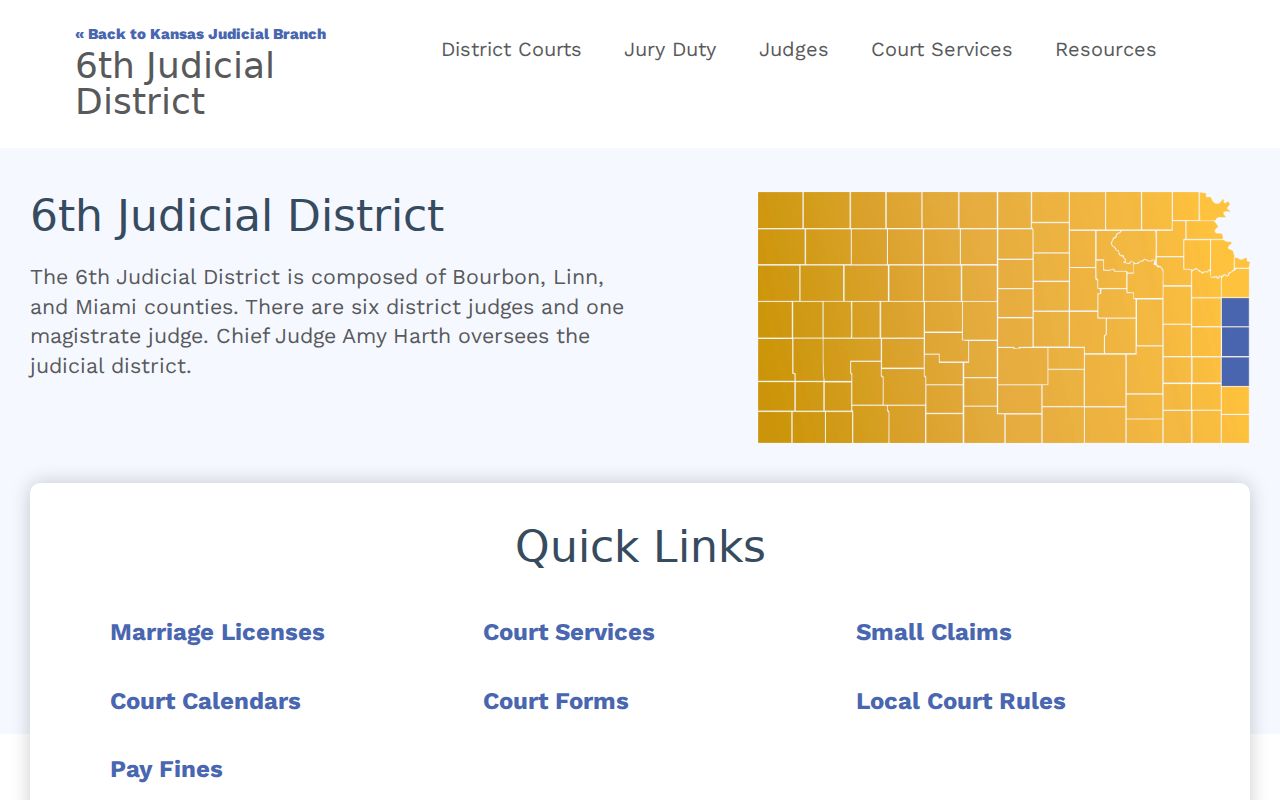
Local procedure often explains why a motion, setting, or transcript request takes a route the event label alone doesn't reveal. The label won't tell you why.
Older Wichita Criminal Documents
A docket entry can list an event without its filing. For that gap, use the public computer in the courthouse law library. State guidance points to a kiosk there. It can expose converted document material the web portal does not. Sign in and ask at the clerk counter. The terminal honors the same limits for sealed and nonpublic records.
The clerk takes requests by telephone, in person, in writing, or by fax. The office is at 206 S 4th Street, Leoti, Kansas 67861; mail goes to P.O. Box 968. Call 620-260-2560 or fax 620-375-2999. Local policy allows three business days to respond or comply. Copies run $0.25 per page. Certification and delivery charges are not published. Ask before you send payment.
Note: The Wichita County criminal clerk publishes no dedicated email address or drop box for record requests.
Wichita Criminal Records Beyond Kansas
A federal charge never shows up in the Wichita County District Court register. Search the District of Kansas through PACER instead. You can also call the federal clerk. The PACER pricing source explains the per-page fee, the document cap, and the quarterly waiver, none of which apply to Kansas CaseSearch or local clerk copies.
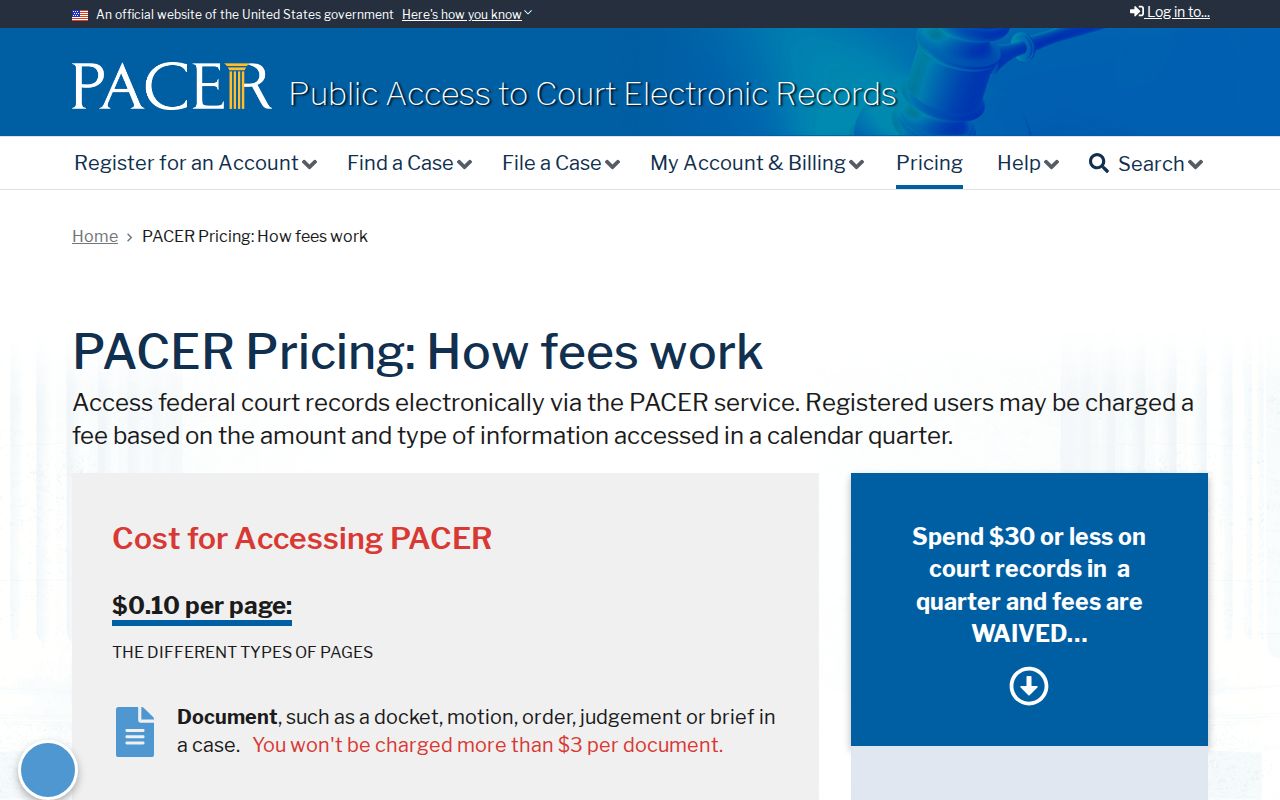
Federal access runs on a separate track. So is the charge state, city, or federal? Settle that question before paying for any docket search. Bankruptcy shows why the split matters, since it is civil rather than criminal. A manifest ties the Wichita federal bankruptcy division to its own source. That separation matters. It keeps a federal courthouse page from being mistaken for the county criminal clerk. The official Wichita bankruptcy division page identifies the federal court location.
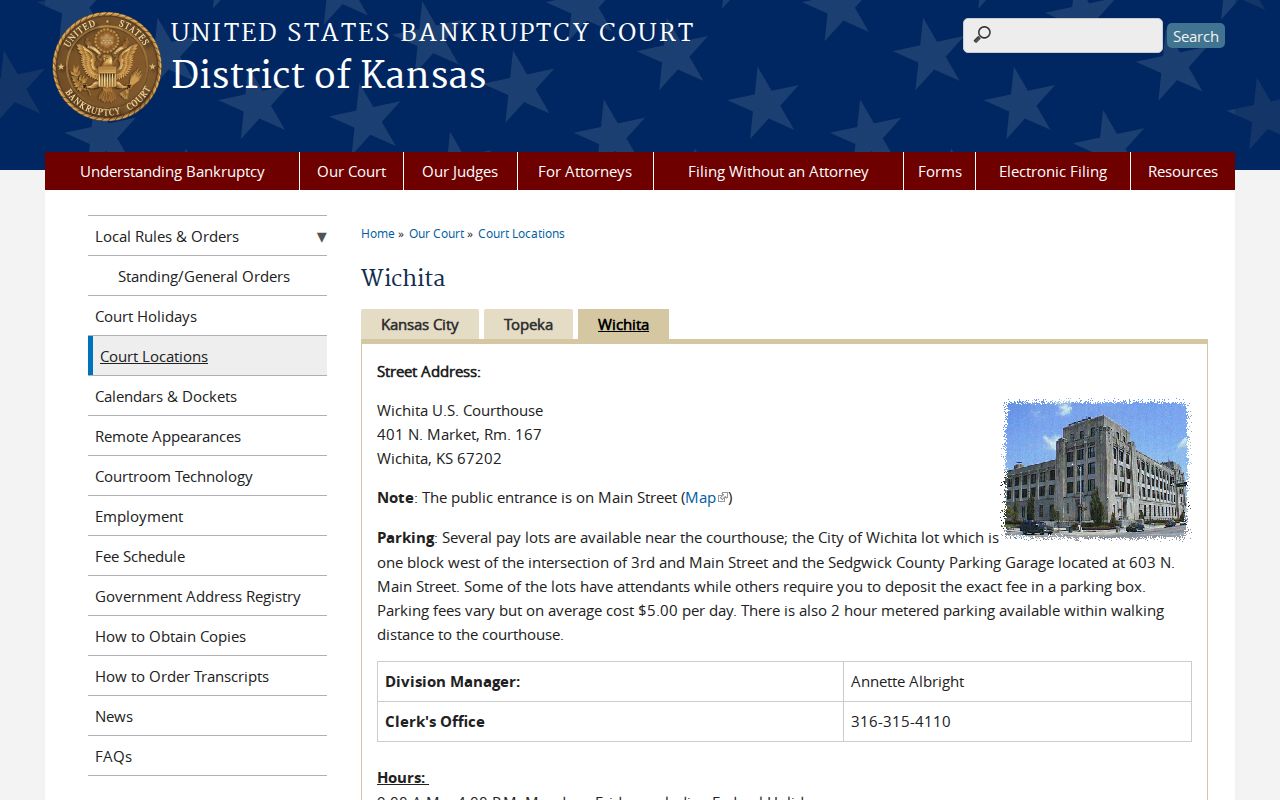
For a county charge, go back to the Wichita County District Court clerk and Kansas CaseSearch.
Wichita Criminal Request Channels
Online court-record data runs thin sometimes. When it does, pick the channel that fits the record. The clerk counter and law-library terminal work best on site. Phone can confirm an office or a setting. Fax, mail, and written requests suit a specific docket or document. A Kansas court-record KORA request can name Wichita County District Court, the case number, the document, a date range, and your contact details. It can also state how you want delivery.
- Online: Kansas Courts CaseSearch for public case information.
- In person: clerk counter and law-library public terminal.
- Phone or fax: 620-260-2560 or 620-375-2999.
- Mail: Wichita County District Court, P.O. Box 968, Leoti, KS 67861.
- Written KORA request: use a narrow description and avoid excess private data.
Court Services handles probation matters across the district. Call 620-271-6150. It does not replace the Wichita criminal clerk. For copies by mail, ask about cost and any return-envelope needs before you submit the request.
Sealed Dockets and Public Access
Public access to court records rests on Kansas Rule 22 and related law. Some information appears online or at a terminal. Not every case or document is open, though. Juvenile, expunged, sealed, investigation-related, and warrant-support material may be omitted or redacted.
Kansas Rule 106B limits online personal identifiers and says an electronic copy is not the official record. K.S.A. 21-6614 supplies the criminal expungement framework. A terminal is no way around a lawful restriction.
Access rule: A missing result may mean the venue is wrong, the web record is incomplete, or access is restricted. Ask the originating clerk which explanation applies.
The clerk can explain your access level. A request alone won't free a protected record. When accuracy matters, compare the events index, the newest setting, and the signed order or judgment.